Not an average, a set of attributes
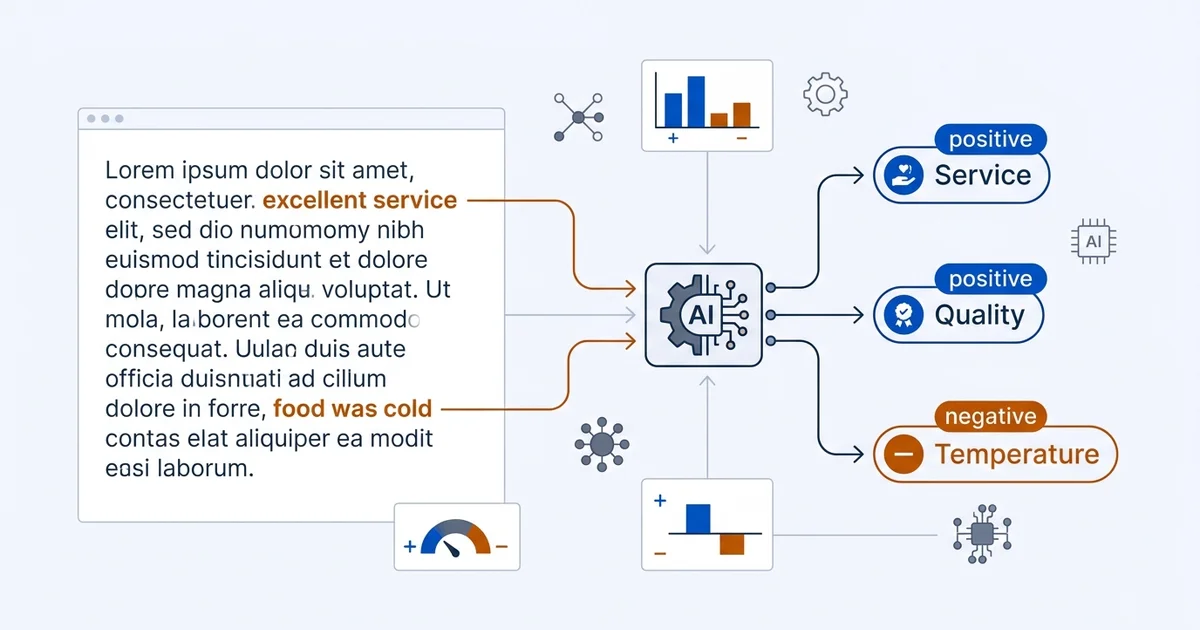
The instinct is to treat reviews as a score. An engine reading your reviews is doing something more granular: pulling out which aspect of the service is being discussed and what sentiment attaches to it.
That approach is called aspect-based sentiment analysis. A review saying “arrived on time, explained the fault before touching anything, and the final price matched the quote” yields three attributes with positive sentiment: punctuality, communication, pricing accuracy.
A review saying “great service, highly recommend” yields nothing extractable. It moves your average and does nothing else.
This is why Lesson 6: reviews, mentions and citations treats review content as more important than review count.
The attributes that recur for local trades
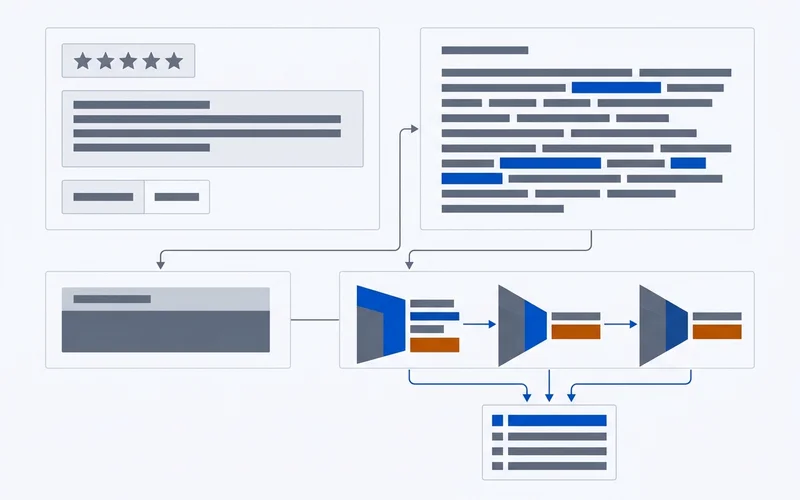
Across local service businesses, the same handful of aspects come up repeatedly:
- Punctuality. Arrival within the promised window.
- Pricing accuracy. Whether the final invoice matched the quote.
- Communication. Explaining the problem and the options before acting.
- Workmanship. Whether the fix held.
- Cleanliness. Leaving the site as they found it.
- Responsiveness. How quickly the first contact was answered.
- Honesty. Being told a repair was not worth doing.
When an assistant characterises a business, it is usually reflecting the aspects that repeat, not summarising the star average. A business described as “known for clear pricing and prompt arrival” got there because several customers said those things in their own words.
Why specific beats numerous
Twenty reviews saying “great service” tell an engine that people are satisfied. Five reviews naming the service performed, the suburb, the response time and the outcome tell it what you do, where, how fast and how well.
The second set is far more useful for retrieval. It contains the facts an assistant needs to match you to a specific question, which is the same principle as the quotable-passage test in Lesson 3, applied to text you did not write.
This has a practical implication for how you ask. You may not script a review or reward one, but you can honestly invite specifics: “if you have a moment, it helps others if you mention what we worked on and which area you are in”. The guide on asking for reviews compliantly covers where that line sits.
What a negative review actually costs
Less than owners fear, and more than they hope, depending on the pattern.
One negative review among many positives reads as an outlier. It can even help, because a flawless profile invites suspicion.
A recurring theme is the real cost. Four reviews over six months all mentioning missed appointment windows establish punctuality as a negative attribute, and that is what gets repeated.
An unanswered negative review is worse than an answered one. A reply that acknowledges the specific issue and states what changed gives any reader, human or machine, a second data point on the same aspect.
A cluster of negatives in a short window attracts attention regardless of content, in the same way a cluster of positives does.
Responding usefully
Keep replies short, specific and calm. Name the issue rather than thanking the reviewer for their feedback in the abstract. If something was genuinely your fault, say so and say what changed. If the complaint is inaccurate, correct the fact without arguing about the interpretation.
Reply to positive reviews too, briefly. A reply naming the service performed adds another instance of that attribute, in your words, attached to the review.
Where this leads
Review content is one of three off-site signals. The other two, structured citations and unstructured mentions, work differently and are compared in the citations versus brand mentions guide.
Together they are the corroboration layer that decides close calls between similar businesses, which is why Lesson 6 sits where it does in the course.
Encouraging specifics without breaking the rules
You cannot script a review or pay for one. You can make it easier for a customer to be specific, and that is a legitimate and underused lever.
Three things help.
Ask at the right moment. Immediately after the job, while the customer can still remember what you did and how long it took. A request sent a month later produces “great service” because the detail has faded.
Name the job in your request. “Thanks for having us out to sort the coolroom thermostat today” gives the customer language to reuse. You are reminding, not scripting.
Invite specifics openly. “It helps other local businesses if you mention what we worked on and which area you are in” is a plain request, applied to everyone, with nothing offered in return. That is the line, and the guide on asking for reviews compliantly covers it in detail.
What you may not do: screen for happy customers, offer anything in exchange, write the text yourself, or ask someone to mention a keyword. All four are visible in the pattern and all four are prohibited.
What this changes about your review strategy
If reviews are read attribute by attribute rather than counted, three conclusions follow.
Volume targets are the wrong goal. Forty generic reviews carry less usable information than eight specific ones. Steady and specific beats a push for numbers.
Replies are content. A reply naming the service and the outcome adds another instance of that attribute, in your words, attached to the review. Unanswered reviews leave the customer’s framing as the only one available.
Themes are what to manage. Watch for repeated attributes rather than reacting to individual stars. If three reviews in a quarter mention arrival windows, that is an operational problem worth fixing, and fixing it is what changes the pattern an engine reads.