Ten terms, defined once
Every field invents vocabulary, and AI search has invented more than most. This page defines the ten terms that actually come up while working through the lessons, in plain language, with a line on why each one matters to a local business. Each entry links to its fuller entry on aiseocourse.wiki and to the lesson where it is used in practice.
If a vendor uses a term that is not on this list, ask them to explain it without the acronym. Most of them can. Once the vocabulary is clear, the 90-day local AI SEO checklist turns it into an order of work.
The terms
AEO, Answer Engine Optimization
Optimising so that an answer engine states your business as the answer, rather than listing your link among ten others. In practice it overlaps almost entirely with GEO and with good local SEO. Why it matters to you: it is often the label on a proposal. Read what the work actually is before paying for the acronym. See the comparison of AEO, GEO and local SEO and aiseocourse.wiki.
AI Overviews
Google’s synthesized answer block at the top of some search results, assembled from web sources with links underneath. Why it matters to you: for local queries it leans heavily on Google Business Profile data, which makes Lesson 2 the highest-leverage work you can do. More on aiseocourse.wiki.
Citation
Two related meanings. In local SEO, a structured listing of your name, address and phone on another site. In AI search, the source link an assistant attaches to a sentence it wrote. Why it matters to you: the first kind feeds the second. See citations versus brand mentions and Lesson 6, plus aiseocourse.wiki.
Entity
The thing an engine believes your business is: one identifiable organisation with a name, a location, a category and a set of confirmed facts, distinct from every similarly named business. Why it matters to you: if an engine cannot resolve you as one entity, it cannot confidently name you. See using sameAs to connect your profiles and aiseocourse.wiki.
GEO, Generative Engine Optimization
Structuring your entity data, citation consistency and markup so that generative engines understand your business well enough to name it inside an answer. Why it matters to you: it is the umbrella term for everything this course teaches. See what GEO means, and the fuller entry on aiseocourse.wiki.
Grounding
Attaching a generated answer to retrieved documents so the model writes from sources rather than memory. Why it matters to you: a grounded answer about your business is only as good as the sources it found, which is why contradictions between your listings cause hedged answers. See Lesson 1 and aiseocourse.wiki.
LLM, Large Language Model
The model that writes the answer text. It predicts language well and remembers specific current facts badly. Why it matters to you: this is exactly why retrieval exists, and why your job is to supply clean, findable facts. More on aiseocourse.wiki.
NAP consistency
Name, address and phone stated identically everywhere your business appears, down to formatting. Why it matters to you: one mismatch is enough to make an assistant hedge or repeat an old number. See NAP consistency explained and aiseocourse.wiki.
RAG, Retrieval-Augmented Generation
The pattern behind most AI answers: retrieve relevant documents, attach them to the prompt, generate an answer from what was retrieved. Why it matters to you: it tells you where your leverage is, which is the documents rather than the model. See how retrieval picks a local business and aiseocourse.wiki.
Schema and JSON-LD
Schema.org is the shared vocabulary for describing things on the web. JSON-LD is the format used to write it into a page. Why it matters to you: it hands an engine your facts in a form it cannot misread. See which LocalBusiness fields matter, Lesson 4 and aiseocourse.wiki.
How these fit together
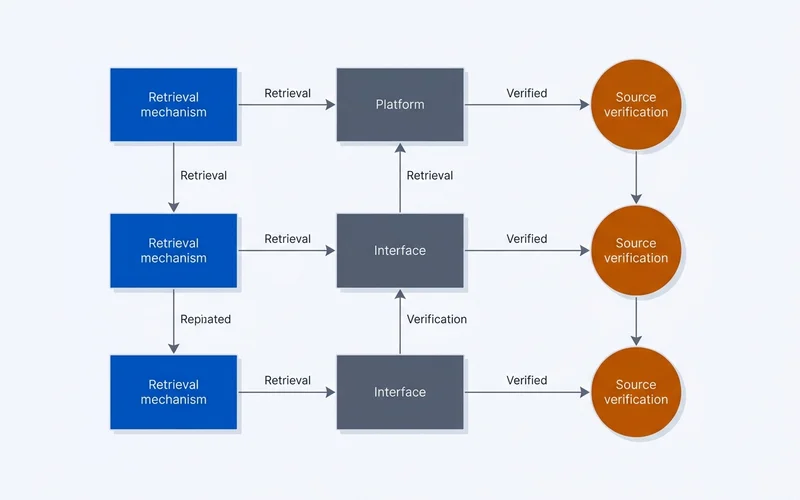
Retrieval finds documents. Grounding ties the answer to them. Citation is how the answer credits them. Your entity is what all those documents are describing, and NAP consistency plus schema are how you stop them describing it three different ways.
That is the whole vocabulary you need. If you want the mechanics behind it, start with Lesson 1. If you want the ordered plan, use the 90-day checklist.
Terms you can safely ignore
A second list, shorter, of vocabulary that appears in proposals and carries little practical meaning for a local business.
“AI visibility score.” No engine publishes one. Any score you are shown is a vendor’s derived metric. Ask how it is calculated and what would change it before treating it as a target.
“Entity authority.” Usually a repackaging of the consistency and corroboration work in Lesson 2 and Lesson 6. There is no authority setting to configure.
“Prompt engineering for businesses.” Relevant if you are building an AI product. Not relevant to being named in answers about your local business.
“LLM optimisation.” You do not optimise the model. You optimise what it retrieves, which is the whole point of the RAG guide.
“AI-first content.” In practice this means clear, specific, well-structured writing, which is what Lesson 3 teaches without the label.
How to use this glossary while you work
Three suggestions.
Read it once, then leave it open. These terms recur across the lessons, and the definitions are deliberately short so you can glance rather than study.
Take the plain definition into vendor conversations. If someone’s usage of a term differs from the definition here, ask them to explain the difference. Sometimes there is a real one. Often there is not.
Do not learn the vocabulary as a project. Nothing in the 90-day checklist requires you to know these words. They exist so the material makes sense and so proposals become readable, not because the work depends on terminology.
If a term you have encountered is missing here, it may be covered in more depth in one of the guides, or it may be one of the ignorable ones above.
Where each term shows up in practice
If you would rather learn the vocabulary by doing than by reading definitions, here is where each one becomes concrete.
| Term | You meet it when |
|---|---|
| RAG and grounding | You read the citations under an AI answer and see which sources built it |
| Entity | Two businesses in your region share a name and an engine cannot tell you apart |
| NAP consistency | You run the listing audit and find three versions of your phone number |
| Schema and JSON-LD | You paste a LocalBusiness block into your site and validate it |
| Citation | You claim a directory listing or see a source link under an answer |
| AI Overviews | You search your own service and a summary appears above the results |
| GEO and AEO | A vendor sends you a proposal with an acronym on the cover |
| LLM | You wonder why an assistant stated your hours wrongly with total confidence |
The 90-day checklist walks through all of those in order, which is a faster route to understanding than memorising this page.