Start with what cannot be measured
Measurement in AI search is immature, and most of the confident reporting you will be sold is inference dressed as data. Being clear about the gaps is the only way to build a routine you can trust.
You cannot get a reliable citation count. There is no published figure for how often an assistant named your business this month. You cannot track a citation rank, because there is no ranked list. You cannot fully reproduce results, because the same prompt run twice can return different sources. And you cannot see conversations, so most zero-click search attribution is guesswork.
What you can do is run a controlled, repeatable observation and watch it over time. That is less satisfying than a dashboard and considerably more honest.
The prompt test
This is the core method, and it takes about fifteen minutes.
Build the set once. Write five to ten questions a real customer would ask. “Who repairs commercial fridges in Springvale”, “emergency plumber near Noble Park open now”, “best dentist for nervous patients in Dandenong”. Use their words, not your keyword list. Never include your business name, or you are only testing whether you exist.
Run it under fixed conditions. Logged out, same three engines each time, same wording. Keep a note of your location, because assistants infer it from your connection and that shapes local answers. If you use a VPN or a different city, record that, because comparability is the whole point.
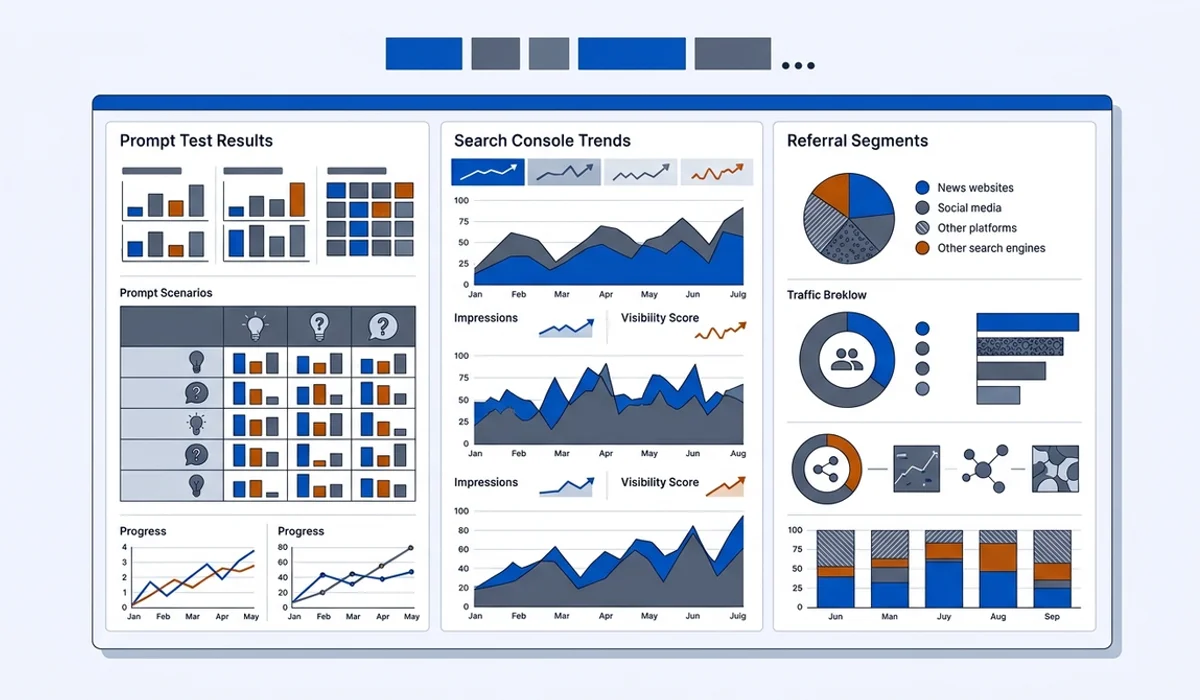
Record what you see. For each prompt and each engine: were you named, who else was named, and which sources were cited. That last column is the most useful one, because it tells you which of your assets the engine can currently see.
The guide on testing whether ChatGPT recommends your business has the full method, including how to avoid the self-deception traps.
Cadence
Monthly. Not weekly, and not daily.
Run-to-run variance is large enough that weekly checking mostly measures noise, and noise invites pointless changes. Monthly is frequent enough to catch a real shift and infrequent enough to survive a busy quarter. A deeper quarterly review, where you re-read the sources being cited and re-check your listings, catches the slower drift.
Run an off-cycle check when something specific changes: you correct a major listing, you rewrite a key page, you change your primary category, or a customer reports that an assistant told them something wrong. The guide on how often to re-check sets out the full rhythm.
The supporting signals
Three sources add context around the prompt test.
Google Search Console. Watch impression trends on queries where AI surfaces appear, watch which queries you surface for at all, and watch the gap between impressions and clicks. A widening gap on informational queries is consistent with answers being read without a visit. It is not proof of a citation, and it should not be reported as one.
Referral traffic. Some assistants send identifiable referral traffic. Segment those sources in your analytics and watch the trend rather than the absolute number, which will be small. A handful of sessions a month from an assistant is normal and still meaningful, because the visitor arrived already informed.
Server logs. From Lesson 5, confirming that the named crawlers arrive and receive 200 responses. If they stopped arriving, that is worth knowing before you spend a month wondering why nothing moved.
Conversational share of voice, meaning how often you are named versus named competitors across your prompt set, is a reasonable derived metric as long as you present it as what it is: your own observation, from your own sample, on a given date.
A monthly scorecard
Keep it to one page:
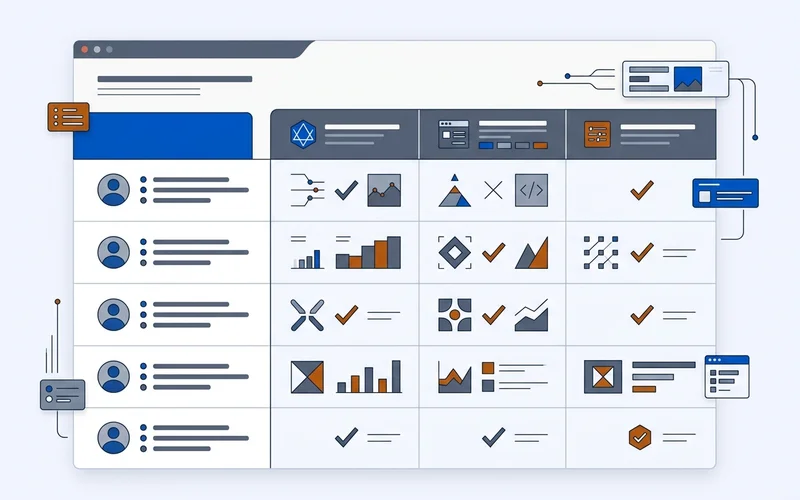
| Field | What to record |
|---|---|
| Date and conditions | When you ran it, logged out, location used |
| Prompts named in | X of 10, per engine |
| Competitors named | Who keeps appearing instead of you |
| Sources cited | Which of your assets showed up, if any |
| Search Console | Impressions, notable query shifts |
| Assistant referrals | Sessions from assistant domains |
| One action | The single change you will make this month |
That last row is the one that matters. Measurement without a decision is a hobby.
When the answer is wrong rather than absent
Sometimes the problem is not invisibility, it is misinformation: an old phone number, a closed location, a service you dropped. The fix almost always starts off-platform, because the engine is repeating a source. Correct the source, then use the platform feedback route, then wait, because re-crawling happens on their schedule not yours. The guide on what to do when AI search says something wrong covers the routes and realistic timelines.
What to do next
Run your baseline this week if you have not already, and keep the sheet. Then move to Lesson 8, which closes the course by telling you what it did not teach you and how to judge whether you need to go further.