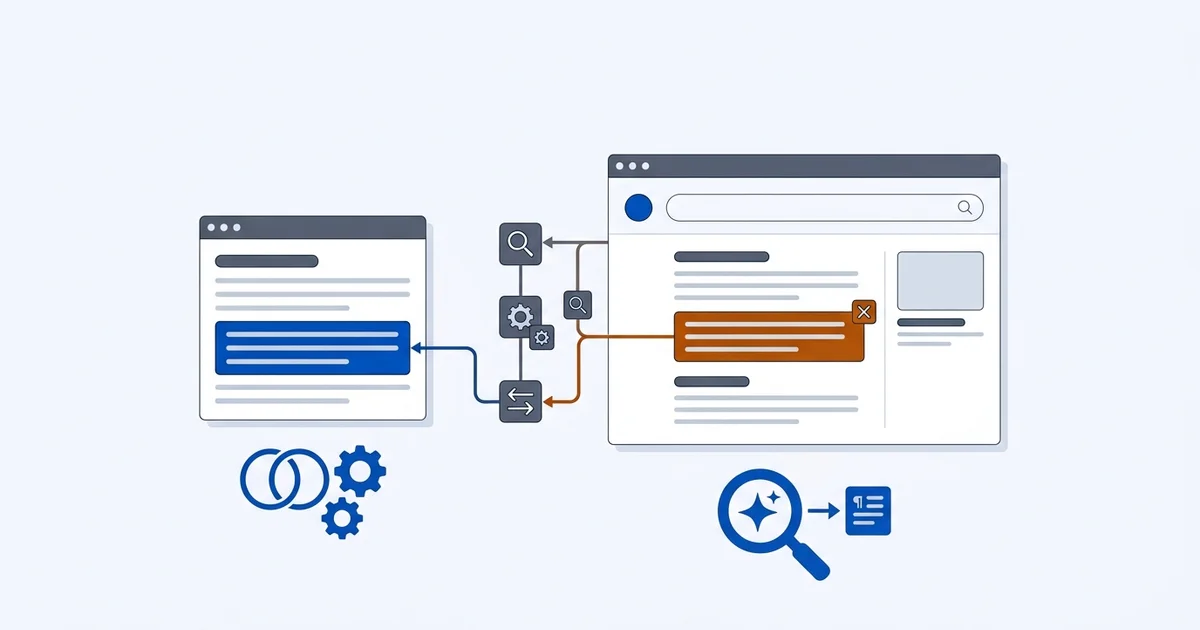
First, work out where the error came from
An assistant stating something wrong about your business is repeating a source. It did not invent your old phone number.
So the first move is not to complain to the platform, it is to find the origin. Run the query again and read the citations. Then search the wrong fact itself: the old number, the closed address, the service you no longer offer. Usually it surfaces within two pages of results, sitting on a directory, an old profile, a cached page or a third-party listing you had forgotten.
This is the diagnostic habit Lesson 7: measure your AI search visibility builds, applied to a bad day. The prompt set in how to test whether ChatGPT and Perplexity recommend your business is the fastest way to confirm the error is repeatable rather than a one-off.
Fix the source, in this order
1. Your own site. Check every page, your footer, your contact page and your structured data. Correcting an engine while your own site still carries the wrong fact is wasted effort.
2. Your business profile. Hours, phone, address, category, services. This is the densest record and the most frequently read.
3. The data aggregators. Data Axle, Neustar Localeze, Foursquare and equivalents. Downstream directories refresh from them, so a stale record here quietly reinstates errors you have fixed elsewhere. The NAP consistency guide has the full audit method.
4. Individual third-party sites. Contact the ones that matter, politely and specifically: URL, the incorrect detail, the correct detail. Most site owners will fix a clear factual error.
5. Anything you cannot control. Note it and move on if it is minor. Escalate only if it is materially damaging.
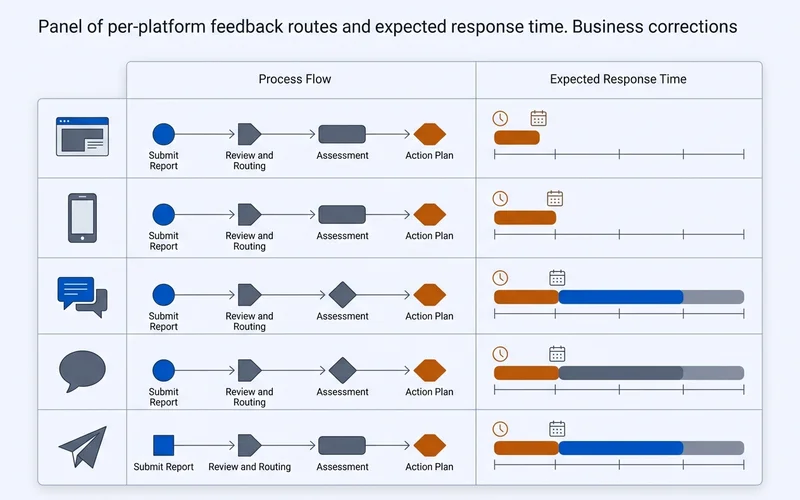
Then use the platform feedback routes
They exist, they are worth using, and they are slower and less certain than fixing the source.
Google surfaces. Use the feedback control on the AI Overview itself, and suggest an edit on your Business Profile for profile-level facts.
ChatGPT. Use the thumbs-down and report control on the specific response, describing the error plainly.
Perplexity. Report the answer through the in-interface control. Because citations are per-sentence here, you can identify exactly which source supplied the wrong claim, which makes the report far more useful.
In every case, state the correct fact and where it can be verified. A report saying “this is wrong” is easy to ignore. A report saying “our phone number is X, confirmed on our Google Business Profile and our contact page” is actionable.
Realistic timelines
| Where the fix happens | Typical time to appear |
|---|---|
| Your own site | Days to a few weeks, once re-crawled |
| Your business profile | Days for the profile itself, longer downstream |
| Data aggregators | Four to eight weeks to propagate |
| Third-party sites | Depends entirely on the site owner |
| Platform feedback | Uncertain, and not guaranteed |
Nothing here is instant. Fix the source, log the date, and re-check at your next monthly test rather than refreshing daily.
In the meantime
Two things reduce the damage while you wait.
State the correct fact prominently on your own site. A line near the top of your contact page, such as “our current number is X, we have not used Y since 2023”, is readable by customers and by engines.
Tell staff what to say. If customers arrive with the wrong information, a calm correction protects the relationship better than confusion at the counter.
When the wrong fact is somebody else’s page
If a competitor or an aggregator publishes something false, start with a polite, specific correction request in writing. Most errors are carelessness rather than malice.
If it is refused and the statement is materially damaging, the platform’s reporting route is next, and genuinely defamatory content is a legal question rather than an SEO one. Either way, keep a record of the page, the date and your request. Do not conduct the dispute in public review replies.
Prevent the next one
Most wrong-fact incidents trace back to an inconsistency that already existed and finally surfaced. The twice-yearly listing audit in the 90-day checklist is what stops this becoming routine.
When the wrong fact is on a site you do not control
This is the hardest case, and it has a sequence.
Ask plainly first. Email the site owner with the URL, the incorrect detail and the correct one. Most errors are carelessness, and most owners fix them when asked clearly.
Give them the easy version. One sentence stating what should change. Do not send an audit.
Escalate through the platform. If a directory has a correction form, use it. If an aggregator is the source, fix it upstream, as the NAP consistency guide describes, because many directories refresh from there.
Keep a record. URL, date of request, response. If the statement is materially damaging and the site refuses to correct it, that record is what any further step will rest on.
Know when to stop. A dead directory with a 2019 phone number, buried on page four of results, is not worth a month of effort. Fix what is read, ignore what is not.
Reducing how often this happens
Most wrong-fact incidents are old inconsistencies finally surfacing in a new interface. Three habits keep the rate down.
Run the twice-yearly listing audit. It catches drift before an assistant repeats it.
Update in the right order after any change. Canonical record, then profile, then site and markup, then aggregators, then directories. Piecemeal updates create the contradictions you will be chasing next year.
Check the sources cited in your monthly prompt test. If an answer is citing a source you do not recognise, look at it now rather than after a customer quotes it back to you. That check takes a minute and is built into the routine in Lesson 7.