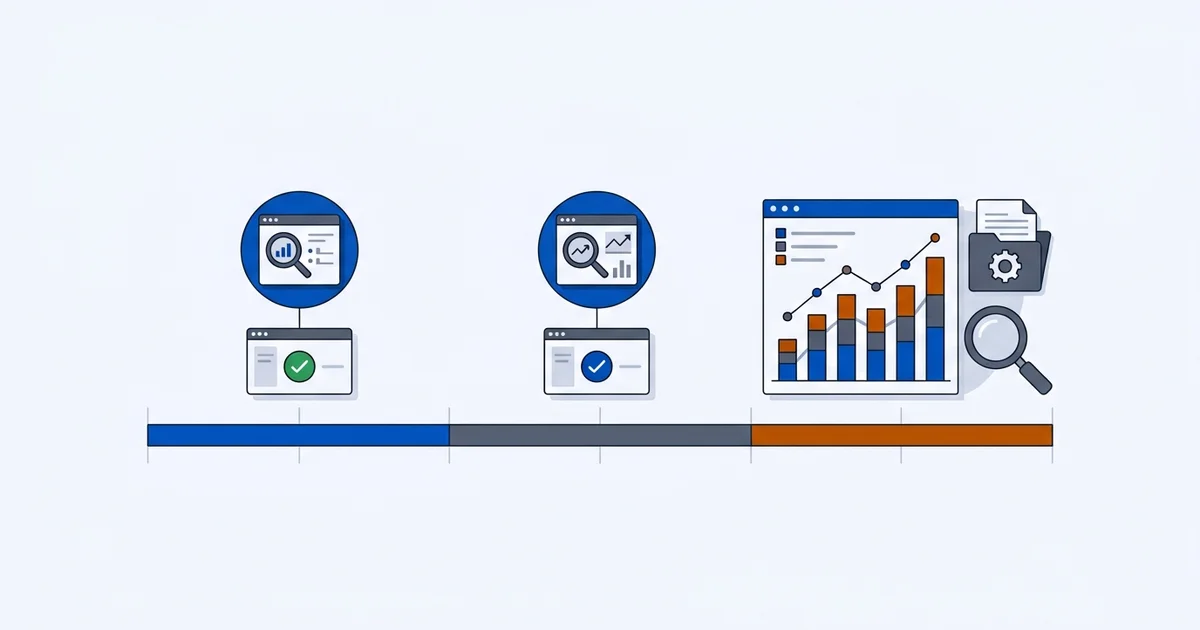
Why weekly checking is a trap
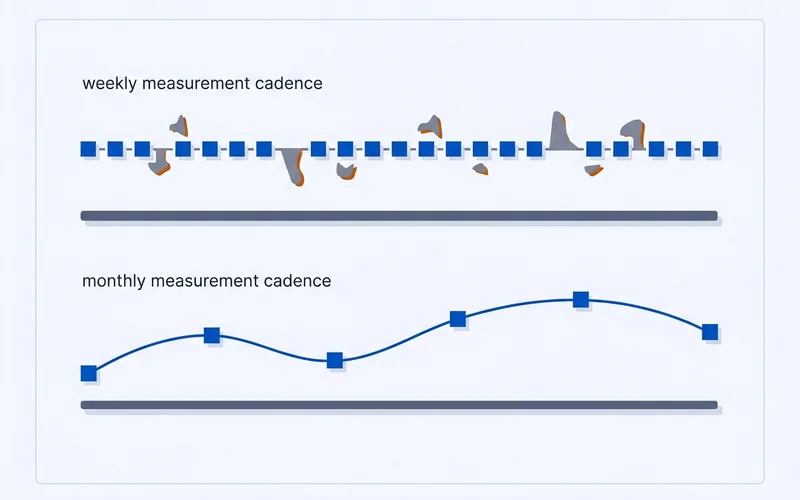
Running the prompt test every week feels diligent. In practice it mostly measures noise.
The same prompt can retrieve slightly different sources on different runs. Engines update indexes on their own schedule. Location inference varies. Against that background, a week-to-week change tells you almost nothing about whether your work is landing.
Worse, frequent checking invites reaction. You see a bad week, change something, see a good week, and conclude the change worked. It probably did not.
The reasoning behind measuring this way at all is in Lesson 7: measure your AI search visibility, and the method itself is in the guide on testing whether ChatGPT recommends your business.
The rhythm that works
Monthly, fifteen minutes. Run the fixed prompt set across your chosen engines, logged out, under the same conditions. Record who was named, who else appeared and which sources were cited. Pick one action.
Quarterly, an hour. Everything in the monthly check, plus: re-read the sources being cited, re-check that your listings still agree, confirm AI crawlers are still arriving in your server logs, and compare against the same quarter’s earlier readings rather than last month’s.
Twice a year, half a day. The full listing audit from the NAP consistency guide, plus a review of whether your key pages still answer the questions customers are asking.
What to log each time
Comparability is the point, so keep the format fixed:
- Date and time.
- Conditions: logged out, location used, engines tested.
- Per prompt and engine: named yes or no, who else was named, sources cited.
- Any factual error observed in an answer.
- The one action you chose.
Keeping the conditions row honest matters more than people expect. A month tested from a different city is not comparable to the month before it.
When to stop checking and go fix something
If three consecutive monthly checks show the same gap, stop measuring it. You have the signal. The next step is work, not observation.
Equally, if your prompt set now names you consistently across engines and your details are correct in the answers, reduce the cadence. Quarterly is enough for a stable business, and the time is better spent on the maintenance routine described in the guide on what to do after the 90-day checklist.
Measurement is a means of deciding what to do next. When it stops changing your decisions, do less of it.
What to log, in a format you will keep
The sheet matters more than the tool. Anything that survives a busy quarter is better than a dashboard you abandon.
Six columns cover it:
| Column | Example |
|---|---|
| Date | 2026-04-06 |
| Conditions | Logged out, Dandenong, ChatGPT + Perplexity + AI Overviews |
| Prompt | “who repairs commercial fridges in Springvale” |
| Named | Yes on Perplexity, no on the other two |
| Sources cited | Own service page, one directory |
| Action taken | Added price range to the Springvale section |
One row per prompt per engine per month. It looks tedious for the first two months and becomes the most useful record you have by the fourth, because it is the only place your own history is written down.
Events worth an off-cycle check
Most months, stick to the schedule. Five events justify breaking it:
- You corrected a major listing or submitted an aggregator fix.
- You changed your primary category.
- You rewrote a page that should win a specific query.
- You moved, changed number or changed trading name.
- A customer reports that an assistant told them something wrong, which the guide on wrong AI answers covers.
Even then, wait several weeks before drawing a conclusion. Nothing in this system moves in days, and an off-cycle check run too early mostly measures impatience.
Why comparability beats frequency
One more reason to resist checking often: every extra variable you introduce makes the history less usable.
If January was tested logged out from your premises on three engines, and February was tested on your phone while logged in at a client site, the two months are not comparable and the record is now noise. Frequency multiplies the chances of that happening, because a check squeezed into a busy Tuesday is the one where the conditions slip.
A monthly rhythm, run properly, produces a record you can still read in a year. That record is what tells you whether the profile work in Lesson 2 or the page rewrites in Lesson 3 actually moved anything, which is the only question that matters.
Set a recurring calendar entry, keep the conditions fixed, and give it fifteen minutes. That is the whole discipline.