The field with the most consequence
Of everything on your Google Business Profile, primary category has the largest effect on what you show up for. It tells Google what kind of business you are, which shapes the queries you are eligible for and, downstream, what assistants understand you to do.
Lesson 2: Google Business Profile for AI search covers the full profile pass. This guide is about getting one field right, because it is the field most often wrong.
Why primary outweighs secondary
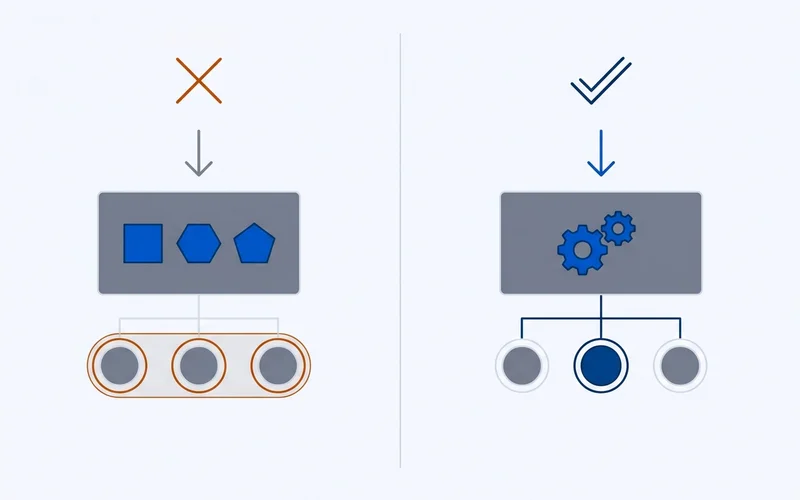
Secondary categories broaden eligibility a little. Primary category defines your core association. If your primary is “Contractor” and your actual business is commercial refrigeration repair, you are competing in a space where nothing about your listing signals the specific thing customers are searching for.
The practical effect shows up in two places: the Local Pack, where a more specific competitor takes the slot, and AI answers, where specificity is what earns a mention. An assistant asked about commercial fridge repair will not name a generic contractor when a refrigeration specialist is available.
How to research the right one
Three steps, about half an hour.
Search your main service as a customer would. Look at the businesses appearing in the Local Pack. These are the ones Google already associates with the query.
Read their primary categories. The category shows on the profile. For a fuller picture, open the Maps listing and inspect the page source for the category fields, which reveals secondaries too.
Compare against your own revenue. Write down the percentage of your income from each service line. Your primary category should describe the largest one, not the one you enjoy most or hope to grow into.
If two categories seem equally valid, pick the one that matches the higher-intent query. A customer searching for a specific repair is closer to booking than one searching a general trade term.
Common mis-picks
Too broad. Picking “Contractor”, “Shop” or “Consultant” when a specific subcategory exists. This is the most common error and the most costly.
Aspirational. Choosing the category for the work you want rather than the work you do. If most of your revenue is maintenance, a category describing installation misdescribes your business.
Adjacent but wrong. A mobile mechanic choosing “Auto Repair Shop” when they have no premises, or a home baker choosing “Bakery” when there is no shopfront. Category and business model should agree, and where they cannot, service-area settings are the right tool. The service-area business guide covers that case.
Legacy. A category set years ago by a previous agency or owner that nobody has revisited since the business changed.
Secondary categories, used properly
Secondaries support the primary rather than diversifying away from it. Add a category only if you would accept a booking for it tomorrow, and only if there is a real page on your site about that service, as Lesson 3 describes.
Three to five well-chosen secondaries is normal. Fifteen is a signal that you do a bit of everything, which is the opposite of what earns a recommendation.
Changing it
If your current primary is wrong, change it. The concern people raise about damaging rankings applies to churn, not to a one-off correction toward accuracy.
Make the change, then leave it alone for at least a quarter. Update your website so the language matches, because a profile category and a site that describe different businesses reintroduce the contradiction problem. Then note the date and watch your prompt test results over the next two months, using the method in Lesson 7.
Category work pairs with maintenance: once it is right, the ongoing job is small, and the guide on how often to update your profile sets out the realistic cadence.
Common mis-picks by trade, with corrections
A few patterns come up repeatedly across local builds.
| Business | Common wrong pick | Better pick |
|---|---|---|
| Commercial refrigeration repair | Contractor | Refrigeration service or HVAC contractor |
| Mobile mechanic | Auto repair shop | Mobile mechanic or auto tune up service |
| Home baker with no shopfront | Bakery | Caterer or custom cake shop, with service areas set |
| Emergency plumber | Plumber, with no secondary categories | Plumber plus drainage service and hot water system supplier |
| Dental practice focused on implants | Dentist only | Dentist plus dental implants periodontist where accurate |
| Cleaning business serving offices | House cleaning service | Commercial cleaning service |
The pattern is consistent: the wrong pick is usually the broader, more familiar category. It feels safer and it competes you against businesses that are better known for something adjacent.
How secondary categories should support the primary
Think of secondaries as evidence that your primary is accurate, not as extra lottery tickets.
A commercial refrigeration business with a primary of refrigeration service might reasonably add HVAC contractor and appliance repair service, because both describe work it genuinely does and both are adjacent enough to reinforce the core positioning. Adding electrician, handyman and air duct cleaning service would do the opposite: it would describe a business with no centre.
Two checks before adding any secondary. Would you accept a booking for it next week at your normal rate? And is there a page on your site that answers that service’s buyer questions, to the standard in Lesson 3? If either answer is no, leave it out.